
Cameras are a bit like computers – they can do so much, but typically we really only know how to do some of what they are capable of. And so it is with the little Fujifilm X100V – I’m still exploring some of the features and frequently get bamboozled by the menus (although I have to say they are more logical than on the Sony A7iii I recently had!)

I learned by chance that the X100V could do focus bracketing (ie taking several photos of a scene focussed at different distances, so they could be combined, or ‘stacked’) so the whole scene was in sharp focus. I’ve done this in the past with limited success, taking the shots individually and moving the focus point manually between shots – all a bit hit and miss (mostly miss!)
The X100V has the option to automate this process, and my goodness, once you figure it out it’s brilliant. Set the camera drive mode to focus stack, set the close and far focus points on the LCD screen, and away you go… After a couple of attempts where I had the lens wide open at f2 and the camera created a batch of 87 images (!) I figured out that f8 was a safe bet and this yielded a more manageable set of 6-10 images to stack. A quick whiz through Photoshop’s merge mode, and hey presto, a stacked image was back in Lightroom. A pretty decent result, with minimal effort. Works well on landscape shots and relatively close up shots – notice how much of each of these photos is in focus – far more than could be achieved by stopping the lens down.
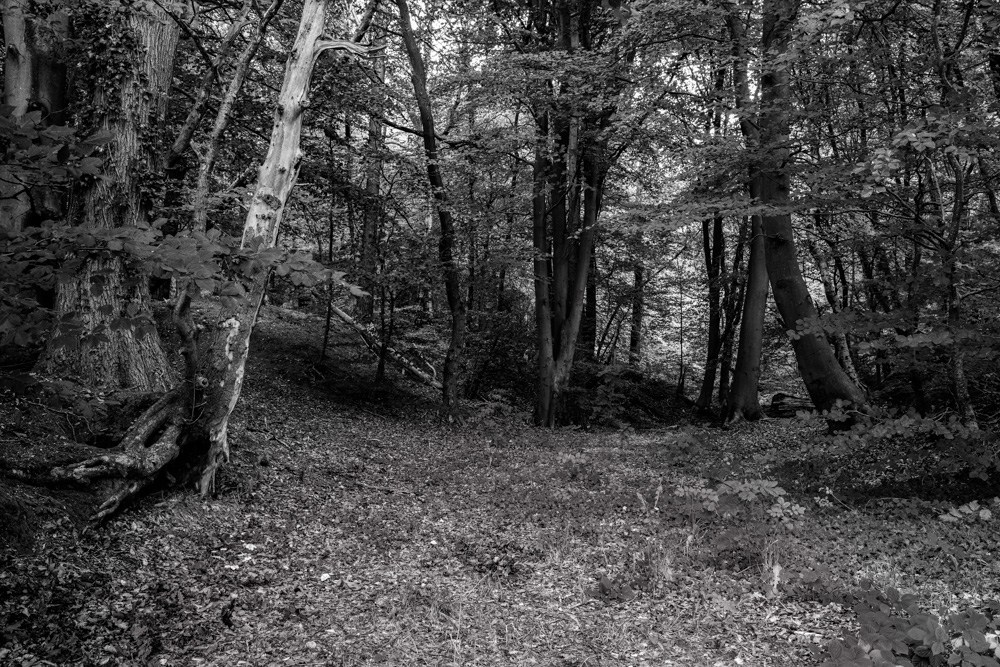
The other feature I was keen to try was geotagging – ie tagging each image with the location coordinates. I’ve tried it with other cameras in the past, either using a 3rd party app that was a nightmare to use, or the rather unreliable option on my Sony camera.
Once I’d connected the camera to Bluetooth on my iPhone and selected the geotagging option, it was pretty much plain sailing – it just works in the background, and you know it’s working because there’s a tell-tale indicator on the screen. Just have to make sure that Fuji Camera Remote is active on the phone.
So, a pleasant hour or so in Maer Hills Woods exploring, and getting some practice in with these really useful features. What next I wonder?
 No such feature on the
  I bought my first X100 camera, an X100S (’S’ for 2nd generation) back in 2014, largely as a result of seeing Todd Gipstein’s wonderful
  To be fair, it did work for me for a while, and a produced some decent enough photos, but inevitably I slipped back into GAS (Gear Acquisition Syndrome) and I figured a second interchangeable lens body would suit me better, so sold the X100S. After about 6 months, I really missed that little camera’s portability and relative simplicity, so picked up what was then the latest 3rd generation X100T, but didn’t end up using it as much as my other cameras, so that too went after a few months!
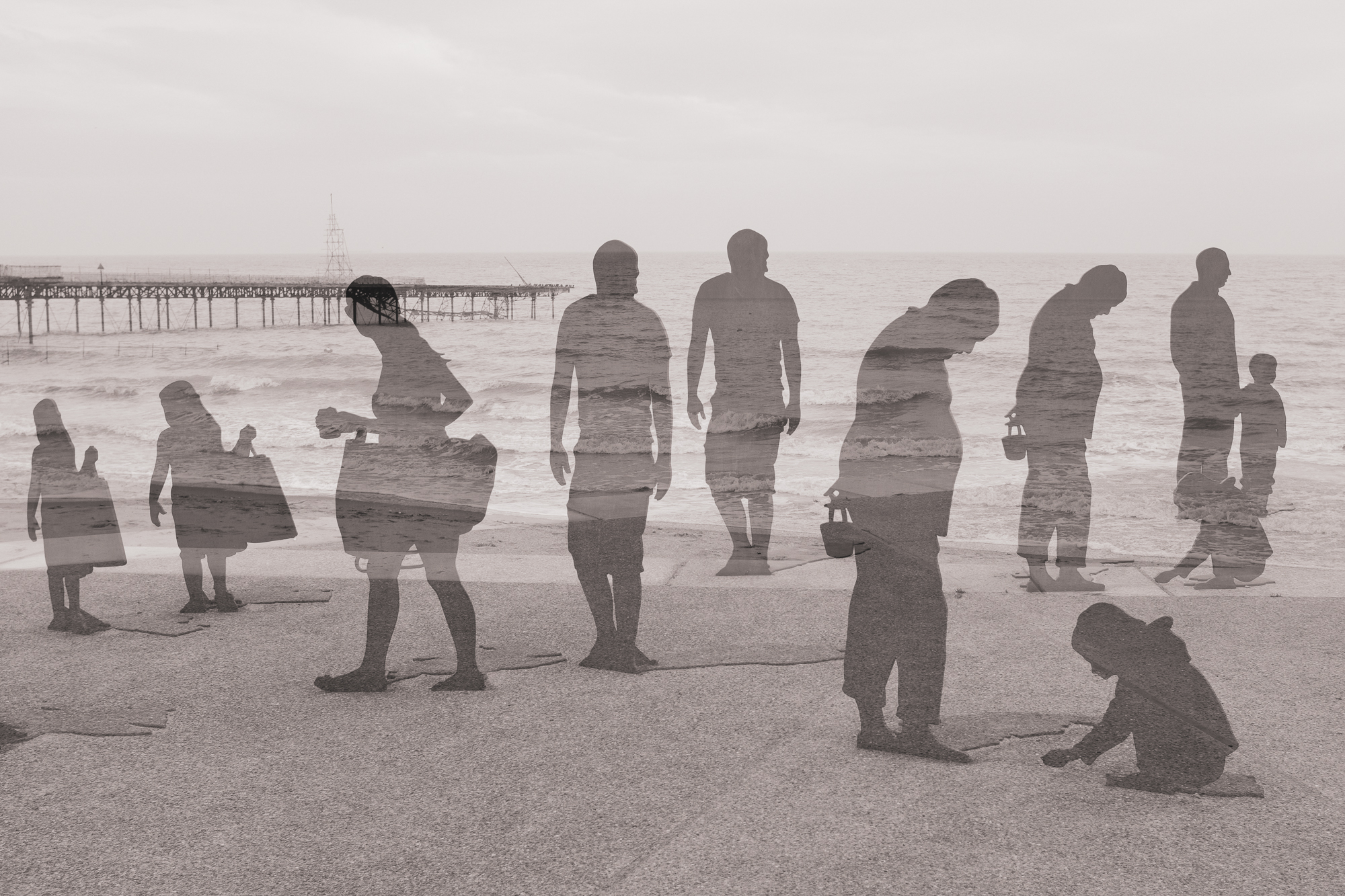 Fast forward to 2017, and I was invited to a launch event for the latest 4th generation X100F, and although very impressed, wasn’t tempted to spend the £1200 asking price. I did however manage to borrow one for a family holiday in France in 2018 as I was looking for something more portable than the Sony A7iii which by then was my main camera. I also had a Sony A6300 – great little camera, but there wasn’t a compact lens for it that delivered really good image quality so I had doubts about it as a travel camera.
 It took me a while to realise that all I really needed was the Fujifilm X100F – small, simple, but capable of great results. No lenses to change, just a lens hood and a couple of spare batteries, and the camera is pretty much pocketable too.
 Life with a Fuji X100 camera